


“They seem like they might be down the path where they don't want to disrupt it with anything new.”
A B2B marketing leader had just discovered that her Marketing Ops team was already evaluating another attribution solution.
She didn't know much about it.
She hadn't even had a chance to ask which solution they were considering.
But her manager seemed reluctant to revisit the decision.
“I think she wants to keep everything as easy as possible for her.”
Meanwhile, the marketing team was spending heavily on LinkedIn, experimenting with Meta and Reddit, and struggling to understand whether any of it was contributing to pipeline.
The new tool might solve that problem.
Or it might give them another way to report on activity without answering the question marketing actually needed answered.
Which specific ads are influencing the opportunities and revenue we're creating in Salesforce?
The Tool Was Being Evaluated... The Problem Wasn't Solved
When we asked this marketing leader how her team measured its advertising, she described a process that probably sounds familiar.
They could see engagement.
They could see clicks.
They could evaluate whether an ad appeared to be working inside LinkedIn.
Beyond that, they were largely guessing.
“We see an increase in pipeline like three to six months down the line. Maybe we're doing something right. But that's it.”
Their campaigns were always running, which made it even harder to isolate what had contributed to the results.
And when we asked about top-of-funnel measurement, she admitted:
“We really have no earthly clue how our top of funnel channels are helping us or if.”
That was the problem she wanted to solve.
Yet the decision about which technology to use was already moving through another part of the organization.
Marketing Ops had its own priorities.
Her manager wanted to avoid unnecessary disruption.
And the marketing leader who needed the answers wasn't sure she could even get another solution considered.
This is how companies can end up investing in measurement technology without first agreeing on what the measurement needs to accomplish.
Not because Marketing Ops is making a bad decision.
But because the people responsible for implementing a system and the people responsible for using its answers may be evaluating different things.
Marketing Ops needs something that integrates cleanly, maintains data quality, and doesn't create a new operational burden.
Marketing leadership needs to know which investments are contributing to qualified pipeline and revenue.
A successful implementation doesn't necessarily mean you've solved the marketing decision problem.
There's A Big Difference Between Tracking A Conversion And Understanding What Influenced It
Salesforce already allows teams to create campaigns and track activity.
So what would another platform actually add?
The answer depends on what you need to know.
Suppose a prospect sees several LinkedIn ads over the course of a month.
They don't immediately fill out a form.
Later, they search for your company on Google, visit the website, and request a demo.
The opportunity eventually closes.
If you're looking primarily at the final conversion, paid search may receive most or all of the credit.
But what role did those earlier LinkedIn ads play?
Which creative did the prospect encounter?
Were those ads part of the journeys of other accounts that became qualified opportunities?
And are the campaigns generating the most clicks also the ones appearing in journeys that eventually produce revenue?
These questions matter because the channels creating demand can be very different from the channels receiving attribution credit.
A tool may accurately record the final conversion and still leave the marketing team with an incomplete understanding of the advertising that preceded it.
That doesn't mean the tool is defective.
It means conversion reporting and understanding advertising influence are different jobs.
And before committing to a measurement solution, it's worth knowing which job you're hiring it to do.
The Question That Changed The Conversation
As we explained how Blueprint connects advertising data with GA4 and Salesforce, the marketing leader interrupted to make sure she understood.
“I think you said this just to, like, make sure I understand you're tracking like, influence, not just... this is the last touch.”
Then she clarified what she wanted to know.
“What ads had any influence at all in this account or person's journey.”
Exactly.
Blueprint's Influence helps reveal the observable advertising interactions that occurred along the buyer's journey.

That includes visibility into individual ads and creative, rather than stopping at a channel-level summary.
So instead of seeing only that LinkedIn generated a certain number of clicks, you can examine how particular advertising interactions appear in the journeys associated with downstream conversions.
And when the data is connected to Salesforce, those journeys can be evaluated against the milestones your business actually cares about.
MQLs.
SQLs.
Opportunities.
Closed-won revenue.
Where the underlying tracking and CRM data support it, you can investigate which advertising interactions preceded those outcomes.
That's a much more useful starting point for deciding what deserves additional investment.
Especially when the ads producing the most attractive platform metrics aren't necessarily attracting your best customers.
Of course, not every marketing interaction is observable. And appearing in a buyer's journey isn't proof that an individual ad caused a sale.
But understanding the interactions you can observe gives you evidence that last-touch reporting alone may miss.
Your Attribution Tool Should Help You Decide Where The Money Goes
Imagine your LinkedIn team has two campaigns.
Campaign A is generating more clicks and cheaper leads.
Campaign B has higher acquisition costs.
Inside LinkedIn, Campaign A looks like the obvious winner.
But when you connect advertising interactions to downstream Salesforce outcomes, you discover that Campaign B is appearing more frequently in journeys associated with qualified opportunities.
Now you have a different decision to make.
Do you continue scaling the campaign producing the cheapest leads?
Or investigate whether the more expensive campaign is reaching the people your sales team actually wants?
You'd want to consider volume, data quality, sample size, and the available evidence before changing budgets.
But at least you're asking the right question.
This is the difference between buying technology that helps you describe marketing activity and buying technology that helps you make better marketing decisions.
It's also why spending hours manually piecing together attribution reports is such an expensive use of a marketing team's time.
The purpose of connecting the data isn't to create another reporting obligation.
It's to make the answers available when decisions need to be made.
What Happens When You Need More Than Buyer-Journey Reporting?
A prospect may see advertising without clicking.
A campaign may influence demand without leaving a complete, identifiable path to a Salesforce opportunity.
And sometimes the most important question isn't which ads appeared in a particular buyer's journey.
It's whether increasing or decreasing investment in a channel is associated with a meaningful change in business outcomes.
That's why Blueprint also provides Impact.

Impact evaluates statistical relationships between changes in advertising investment and changes in downstream results, where sufficient data is available.
It adds another perspective beyond observable attribution.
For example, if you're increasing LinkedIn investment while pipeline is growing, you want to investigate whether the available evidence supports a relationship between those changes.
You also want to know whether you're approaching diminishing returns or whether another channel may have room to grow.
Impact doesn't turn correlation into proof of causation.
But it helps teams evaluate advertising performance beyond the subset of interactions captured in an individual conversion path.
And with Optimizer, the objective becomes more practical still.
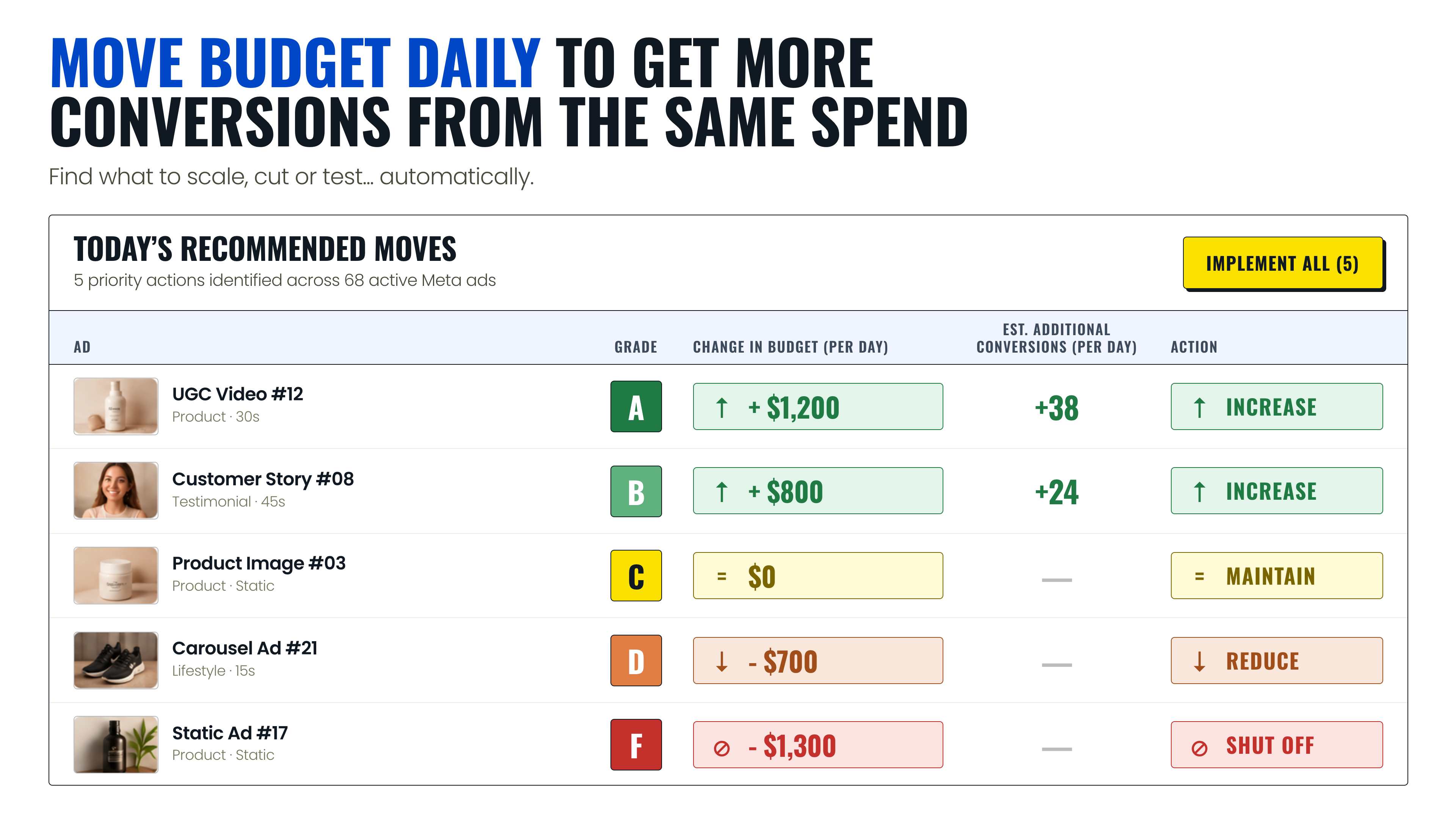
Which budget allocations appear to offer the best opportunity to improve the metric you've chosen?
Maybe that's qualified leads.
Maybe it's SQLs.
Maybe it's closed-won revenue, where the available data supports that level of optimization.
The system helps identify allocation opportunities across channels, campaigns, and individual ads.
Because knowing your attribution is directionally right is one thing.
Having enough evidence to make the next budget decision is another.
Marketing Ops Doesn't Need Another Problem To Manage
The marketing leader's hesitation about introducing another platform was understandable.
Her manager wanted to keep things simple.
Marketing Ops was already evaluating something.
Nobody wanted to restart a technology selection process without a compelling reason.
And frankly, they shouldn't have to.
If the solution they're evaluating can answer the questions marketing needs answered, integrates with their existing systems, and supports the decisions they're trying to make, that's valuable.
But those capabilities should be established before the decision is final.
With Blueprint, our team helps connect the existing advertising platforms, GA4, and CRM systems, and works through the measurement setup required to make the data useful.
That includes identifying tracking gaps and strengthening connections between advertising activity and downstream outcomes.
The goal is to take measurement work off the team's plate, not hand them another platform they have to spend hours reconciling.
It's worth asking whether the technology under consideration will save the team time or simply add another system to manage.
For Marketing Ops, the implementation needs to be manageable.
For the marketing leader, the results need to be actionable.
And for the business, the investment needs to produce answers that justify the effort.
Those requirements should reinforce one another.
Get Updates Like This Monthly
Join our Mailing List
Blueprint Advertising Machine needs the contact information you provide to us to contact you about our products and services. You may unsubscribe from these communications at any time. For information on how to unsubscribe, as well as our privacy practices and commitment to protecting your privacy, please review our Privacy Policy.
Before The Decision Is Final, Ask For A Demonstration
Near the end of our conversation, we brought the discussion back to Salesforce.
If the platform could help show which specific ads were associated with closed-won revenue, along with the milestones leading up to it, would that be worth bringing to Marketing Ops?
The marketing leader was interested.
She explained that pipeline was how her team was judged, and revenue mattered even more.
Then she said she would speak with Marketing Ops about whether they were willing to evaluate another solution.
If they were, she would suggest bringing the relevant people to a demo.
That wasn't a purchase decision.
It wasn't a commitment to replace the solution already under consideration.
But the conversation had moved beyond whether the organization wanted another tool.
Now there was a specific business question worth testing.
And that's the question I'd encourage any marketing leader to bring into an attribution evaluation.
Can you show me which specific ads influenced the qualified opportunities and closed-won revenue recorded in Salesforce, including interactions that didn't receive the last click?
Don't settle for a presentation about dashboards.
Ask to see how the underlying data is connected.
Ask which interactions are observable and which aren't.
Ask whether you can move from a channel-level report to individual ads and creative.
And ask how the findings help you decide where to invest next.
If the tool you're evaluating can answer those questions, great.
If it can't, you deserve to know that before you've committed months of implementation work and made the new system part of your reporting process.
Because the most expensive attribution tool isn't necessarily the one with the highest subscription price.
It may be the one you successfully implement...
Only to discover you're still unable to answer the question you bought it to solve.
FAQ
What should I ask before buying a marketing attribution tool?
Ask whether the platform can connect advertising activity to your CRM outcomes, show observable influence beyond the last click, provide ad-level visibility, and support decisions about budget allocation. Also verify integration requirements, data limitations, implementation responsibilities, and ongoing operational effort.
Can marketing attribution tools connect individual ads to Salesforce revenue?
Some platforms can connect observable advertising interactions with Salesforce events, including qualified opportunities and closed-won revenue. The level of detail depends on their integrations, identity resolution, tracking coverage, and CRM data quality. Ask vendors to demonstrate this capability rather than assuming it is included.
What's the difference between attribution and marketing influence?
Attribution assigns conversion credit to marketing interactions according to a model. Influence examines the observable interactions that occurred during a buyer's journey, including those that may not receive last-touch credit. Neither automatically proves that a particular ad caused a sale.
Does Blueprint replace Salesforce or marketing automation software?
No. Blueprint is designed to connect existing advertising, analytics, and revenue systems to provide a more unified view of marketing performance and support optimization decisions. It does not replace Salesforce as the CRM system of record.
How does Blueprint differ from traditional attribution reporting?
Blueprint combines observable buyer-journey analysis through Influence, statistical spend-and-outcome analysis through Impact, and allocation recommendations through Optimizer. Its objective is to help teams understand performance and make better investment decisions, rather than only report conversion credit.
Should Marketing Ops or the marketing team choose an attribution platform?
Both should participate. Marketing Ops needs to evaluate integration, data integrity, maintenance, and implementation effort. Marketing leadership should establish which business questions the platform must answer and how its outputs will support acquisition decisions.